That’s right, people – I’ve been on the front line of the entertainment industry for a full quarter of a century. Twenty-five years ago today my first book, Anthropology, was published in Italy. I was out of the trap and on my way. It’s been a psychedelic blizzard ever since, with highs, lows and in betweens. Longstanding readers will know that the lows have been piling up for the last few years – I’m passing this momentous milestone with my first eight books out of circulation in my homeland thanks to *checks notes* accounting irregularities at the publishing house. [I won’t return to that unfortunate business in detail today, but if you’re after an update, it’s as raw as ever – the case is not closed, and I’m still as angry about those people as Rupert Grint is about having to pay his fair share of income tax.]
It’s been over four years since Sour Grapes came out, but I’ve not been idle. I had the idea of marking this anniversary with an annotated compendium of my three story collections, and got started on it in the middle of 2022 with the aim of getting it ready for this year. To my amazement, I made it. Get a load of this:
[Since you ask, Tunnel of Love is a nod to the Fun Boy Three single that I bought from Woolworth’s in Tiverton in 1983.] Frustratingly, though, we’ve hit a snag. A publisher came on board last year, telling me they were up for putting it out in 2025. Months went by with no further news, and when their silence started to become ominous I chased them up, at which point they told me they’d decided that the book was too long and they couldn’t afford the paper. Oh.
Maybe this is the full story – times are really tough for small presses – or maybe they also had cold feet about the content of the book. I don’t know, and I’m not going to press them; I would rather move on with a minimum of hard feelings. The problem may stem from the notes in the omnibus amounting to a kind of memoir in which I tell stories about the stories, as well as going into the books’ publication histories. It is, I hope, a light and enjoyable read, but anecdotes about my dealings with publishers were inescapable if I was to do this properly, and the picture it paints of some of the characters in and around the book trade is not wholly flattering. I know from experience that the biz is pathologically inward-looking and wretchedly cautious (often to the point of coming across as a shower of snivelling cowards), so finding a home for this book was always going to be a struggle. I can’t see a big house touching it with a barge pole, so its only hope is to be taken on by a pugilistic independent publisher. If you happen to be a pugilistic independent publisher who digs what I do and can afford the paper, feel free to get in touch.
If no pugilistic publisher is forthcoming I’ll have to weigh up my options. I’m hoping it won’t become a Great Lost Book. Even if you already have the story collections there’s a ton of new material in there (60,000+ words), so it counts as the 11th instalment of the Dan Rhodes franchise and will consequently be an essential purchase for everybody, if and when it does finally appear. I would have preferred this update to have trumpeted a release date, but what can you do? I don’t know how all this is going to unfold, but I’ll keep you posted on any major developments. In the meantime, stay optimistic and save up your pocket money just in case…
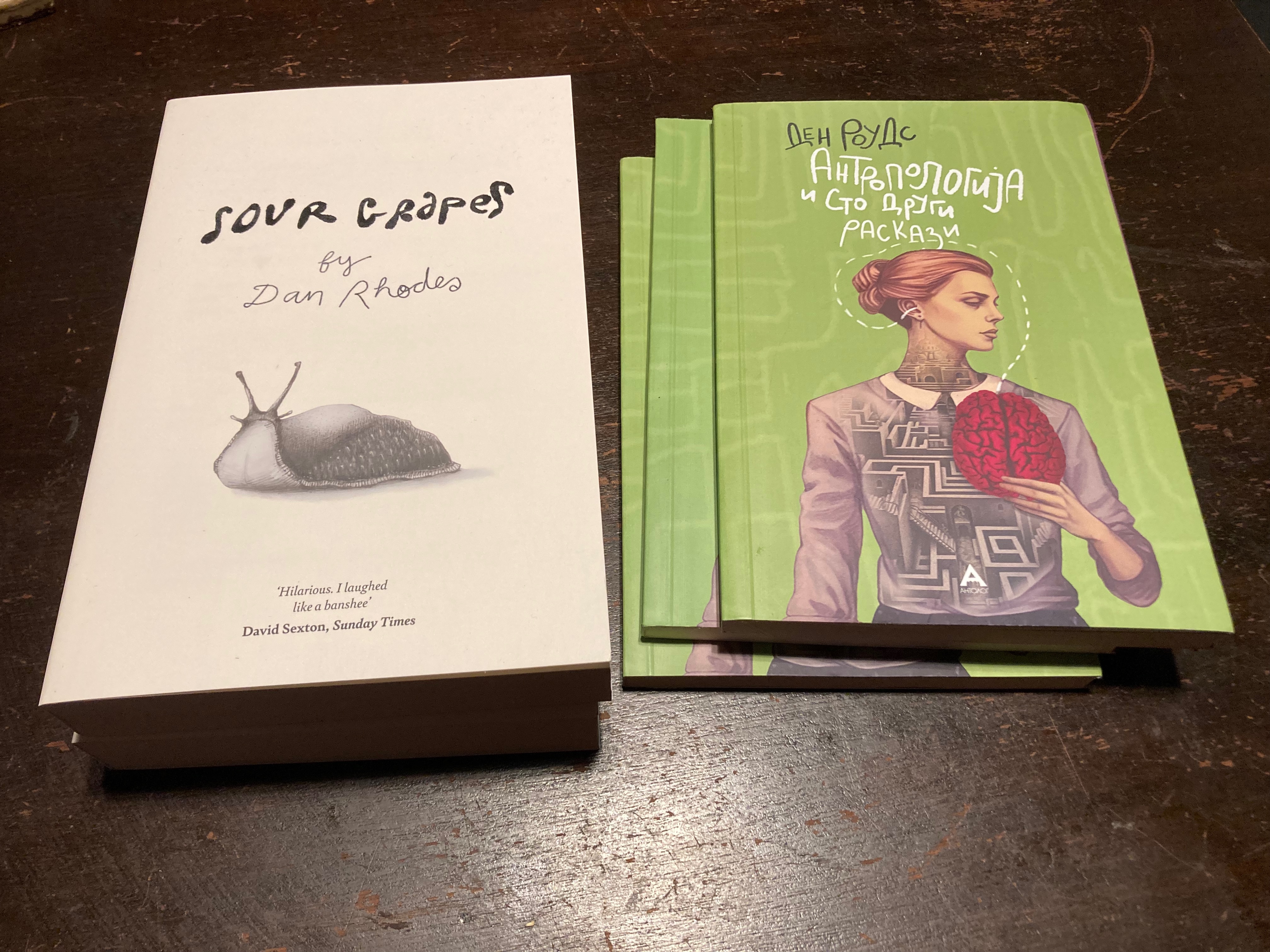
In news that will come as a shattering blow to my enemies, I’m still in the game. For starters, Sour Grapes has just come out in paperback. I expect you’ve already read it, but if not you’re running out of excuses: buy it from your favourite bookshop today. [And I don’t know exactly how these things work, but I would like to think that international shipping costs will be slightly less terrifying now it’s smaller. Who knows?]
And what’s the green one on the right? Give yourself a prize if you identified it as being the North Macedonian edition of Anthropology. Needless to say I’m very chuffed about this – it’s my first time ever in Macedonian, and the first time I’ve sorted out a foreign deal by myself. It’s published by Antolog Books, and they’ve been a dream to work with. I would love to give the translator a shout-out, but to be honest I can’t work out what they’re called. I’ll get back to you on that. That’s the thing about translations. I always pass my details on to the translator – sometimes you never hear a word from them, and sometimes you get a good amount of back-and-forth. My Finnish translator even turned up on my doorstep with a bundle of Moomins memorabilia. Nice.
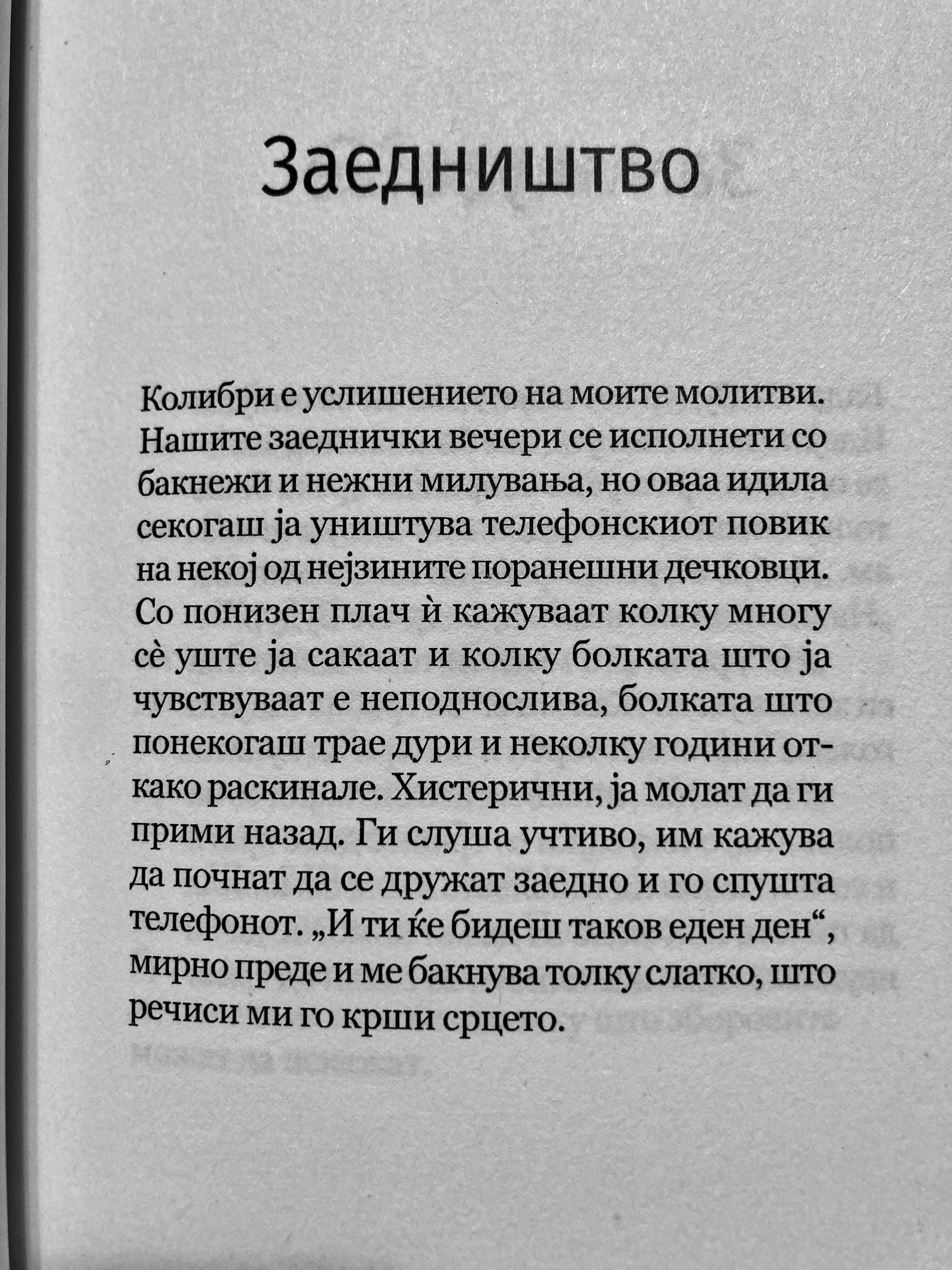
Whenever a new edition of Anthropology comes in, I amuse myself by trying to work out which story is which. This is definitely one of the trickier translations…
In other news… there isn’t much. I’m struggling to find the time to write, what with work and other things, so my plan to get a book out in 2025 is looking less and less likely. But you never know.
I should probably leave it there, while I’m still relatively upbeat. If I stay here any longer the wheels will come off.
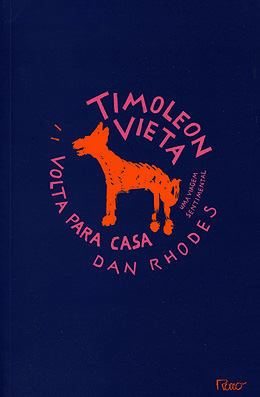
When you’ve been in showbiz as long as I have, landmark anniversaries come around thick and fast. Put up some bunting, pour yourself a beaker of pop, then buckle up and read on. To begin with, we’re celebrating the 20th anniversary of my first novel, Timoleon Vieta Come Home. I wrote this one between 1997 and 2002, and it came out in early 2003. I found it very hard, which is why it took so long. The first people who were supposed to publish it passionately disliked it – they said it would ‘not stand up to critical scrutiny’, and refused to put it out unless I made some really lame-arsed changes. I wasn’t having that, and after a long and ugly scrap I managed to wriggle out of their grip and shop it around the biz.
A few years earlier I’d bought a small and superbly produced hardback edition of Fup by Jim Dodge, and thought my Anthropology stories would sit nicely in a similar volume. In 1998, when I felt the time had come to send them out, its publisher – Canongate Books – had been top of my list. They never got back to me though, and were consequently added to my blacklist, but after I read the brilliant John Fante books that they published I forgave them, so when Timoleon Vieta was free again, I approached them for a second time. I liked the idea of being published alongside John Fante, and the great Sylvia Smith’s Misadventures. I’d also read Laura Hird’s Born Free, and Be Wise, Be Otherwise by Kevin MacNeil, and wanted in. When they told me they liked it, and offered £4000, I jumped at it.
The London publishing scene was stuffy and square, but Canongate Books was different. They were based in Edinburgh for a start, they played music in the office, and the people who worked there were, mainly, a groovy bunch; I have fond memories of getting shitfaced with them in The City Café after work. While London had been dominated by posh people who worked in publishing because that’s what posh people do, this lot gave the impression of having blown in off the street because they loved books and wanted to get involved. It was a relief to get away from the Sloan Ranger side of things – while that wasn’t entirely absent here, this office was mainly the preserve of balls-out Scots, and as a hapless Englishman I had to squint my ears to keep up. These were my new colleagues, and I was happy again.
They did a great job on the production, taking one of the Vien Thuc paintings I’d included and slapping it on the front of a good-looking brown paperback with flaps. The very first ones had a kind of texture to them. Superb. And then it came out. Its awesome publicist helped get it some great coverage, it sold well, it won prizes, and it picked up some cracking reviews, including a belter from Michiko Kakutani in the New York Times – all of which made my former publisher look stupid. Mission Accomplished. It was translated all over the place, and I hit the road more or less non-stop for a year and a half.
It was a hard book to talk about, though. I’m always uncomfortable answering questions about my writing; this is partly because I’m a bit thick and can never think of a clever answer, but also because I’m old-fashioned enough to value plot, and don’t want to risk giving anything away. Perhaps more than any of my other books, this one has an ending that really defines it, and I struggled to talk about it because without touching on how it ends, I’m not really talking about the book at all. [I still get grief about the ending from lucky people who haven’t understood it.] And yet I ploughed on, mainly because I got to go on some amazing trips to places I had never been to before. I toured America with DBC Pierre, and England & Scotland with Jim Dodge; DBC & I were the warm-up act for the Flaming Lips in the Hague; another night I found myself singing Foreigner’s I Want To Know What Love Is while Brian Eno fed me helium to help me hit the high notes. They were good times, and inevitably they fizzled out.
[I was going to write a bit here about how the wheels came off shortly afterwards, how after they’d had an inexplicable hit the trustafarian who ran the show decided they should be more ‘professional’, and people I’d really enjoyed working with kept vanishing, while sleek execs were headhunted from the big houses in London, and the whole scene became less Scottish. You’d visit and it would be deathly quiet, with no music and everyone with their heads down in case they were given the chop for talking in class. They also spent a fortune changing their excellent logo to something that looks like it belongs on a 1980s revision guide. I decided to leave all this out, though – I’ll focus on the positives instead, and besides, breaking the publishing omertà is a lonely and thankless business, and right now I can’t be bothered with it. I was also going to make mention of how the royalties for the dog book stopped coming in around this time – all those shiny new execs, but somehow they couldn’t keep their accounts in order – but I’ve gone on about this in extraordinary detail before, and won’t bother you with that story again. I worked with loads of excellent people during those later years, but the spirit had gone. The squares had taken over.]
It’s out of print now, and will probably remain that way. It puts me too much in mind of the bad times, and is dead last on my list of novels I would like to revive. I can’t remember much about it, but I do remember how it ends. No matter how many people give me grief about it, I’ve always known that ending was the right way to go. Oddly, the 1980s boarding school casualties in charge of the company were exactly the kind of people I was railing against. I wonder what was going through their minds as they read it, and decided to publish it… I suppose they would have been cheering-on the baddie as he commits his atrocity. The reader’s not meant to be on his side, but they must have found a kindred spirit in him as he causes devastation in other people’s lives, then carries on without a backward glance – just as Jeff Bezos roots for Lex Luther when he reads his Superman comics. It takes all sorts, unfortunately.
It had a good life – it starred in Knocked Up, and Cate le Bon wrote a song about it. And I never did find out how to pronounce Timoleon Vieta.
The other anniversary is for my poor, neglected Marry Me, which is now ten years old. I love this book. Hardly anybody has read it, and that’s humanity’s loss. It was my sort-of-follow-up to Anthropology, and if you forced me to choose, I would say it’s the better book. We launched it at Clapham Grand, on a bill with Tim Key, Aidan Moffatt and a pre-inflatable-suit Sam Smith. When the American edition came out it had the most amazing review any book has ever had – an epic in the Washington Post. They loved it, and wouldn’t stop going on about how much they loved it. Sadly, though, it was launched as a Valentine’s Day title, and because nobody reads Valentine’s-themed books, let alone reviews of Valentine’s-themed books, it went unnoticed and had no impact on sales. Gutting.
Now it’s time for some commerce:
You should finally buy a copy of Marry Me. Just click here to do so in a way that makes me a couple of quid. When it arrives you’ll see that I’ve hand-corrected the typo in the bio.
You can buy the dog book as well, if you’re so inclined. The remaining copies live here.
And when I did the long piece about This is Life they sold out pretty quickly, but I found another box of them in the cellar so they are back in stock now.
And they’ve revived the hardback-for-a-fiver offer on Sour Grapes. Let’s face it, if you don’t take them up on this, there’s not a great deal of hope for you as a human being.
Commerce over.
Don’t worry, I think this is the only time you’ll be hearing from me this year. I’ll be back at some point though, with more of the usual. Hopefully I’ll have new stuff to report. I’m trying to get something together for 2025 – my Showbiz Silver Jubilee – but it’s hard to find the time. I just don’t know.
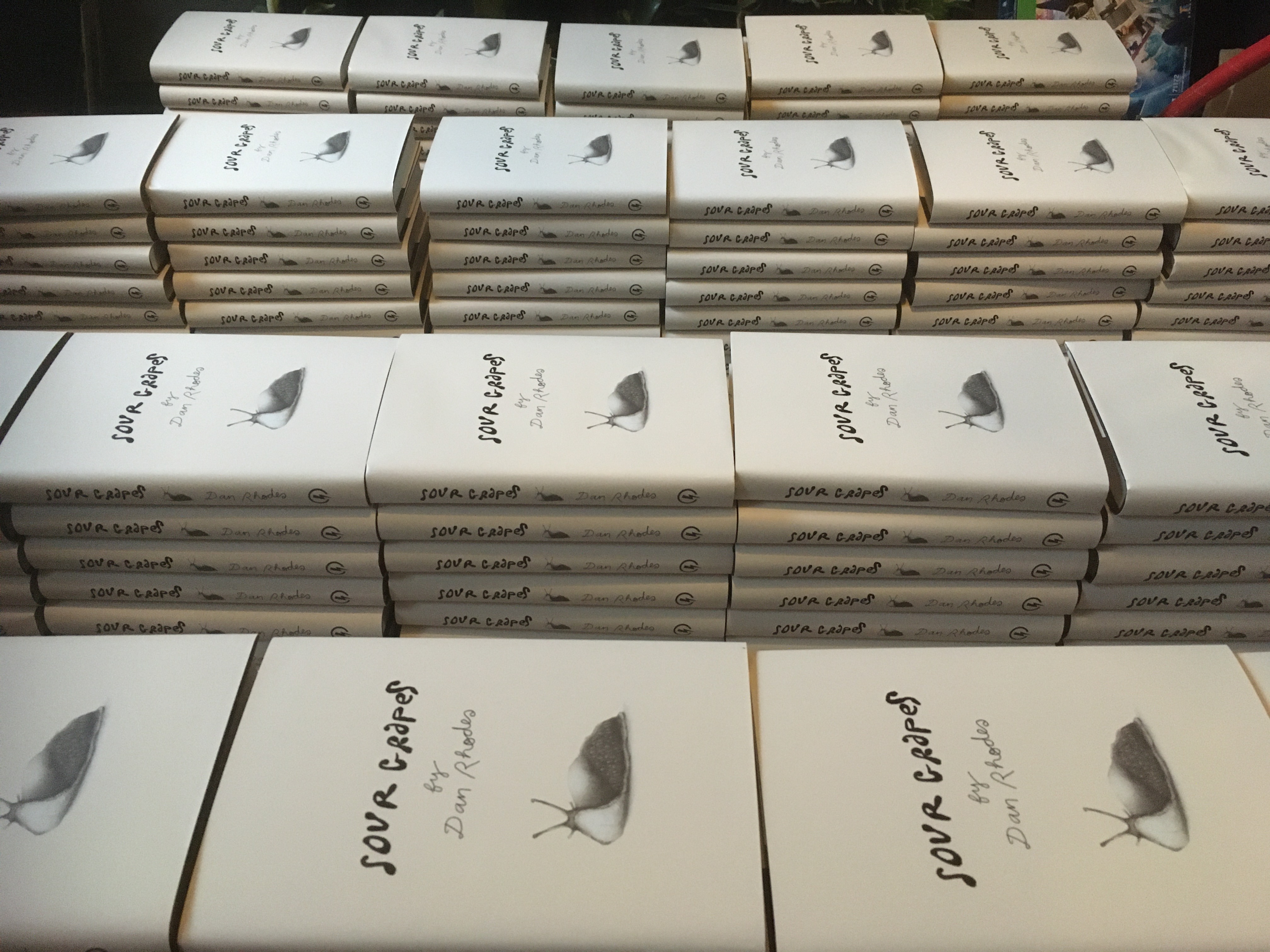
Look at them. Don’t you wish you had one? Even if you do have one, see how good they look piled up. It’s been out for over a year now, and in spite of my enemies’ best efforts it’s ticked over surprisingly well. This comeback was all a bit of a leap into the unknown, and I wasn’t sure anybody would remember me so it’s a relief to know that there are still some people out there with incredibly good taste: people like you. Business-wise I tried out something new too – a profit-sharing deal offered by Eye & Lightning Books, where you don’t get an advance but if the book shifts you get a much better royalty rate than a normal publisher would offer. It was all very experimental, but so far it’s worked – I’ve had my first cheque for it. [It’s almost enough to make you wonder why authors put up with the crumbs-under-the-table model that’s offered by most of the rest of the biz…] Call me a breadhead, but I like getting paid; not least because it helps to fund my debilitating addiction to Japanese detective novels, but also because it’s a palpable signal that there are still people out there who dig my trip, and after a pulverising few years that was a much needed morale boost. Big thanks to everyone who’s bought a copy, and who’s helped us get word out that it exists – you’re a true patron of the arts. And if you haven’t bought it yet, read on…
We still have a pallet of hardbacks to shift, to make way for a paperback edition which will hopefully be out at some point next year. Here’s where you come in: instead of sending them off to the mincer like a normal publisher would, we’re banging them out at a fiver a pop. Even with postage added it’ll be the same price as your average paperback. And if you’re overseas, even with international postage it’ll make it a slightly less intolerable price than it was before. This offer runs through December, and it’s while-stocks-last, so grab ’em while you can. It’s a superb illustrated edition that would be a credit to anyone’s bookshelf. If you bought it at full price, please don’t be aggrieved – some of the money will have gone towards my new dehumidifier and/or the latest Keigo Higashino novel, so you’ve secured your place in heaven. All you have to do is click here, and before you know it this glorious object will be yours to keep. Why not get two – one to read, and one for best? If you spend over £15 at their shop they throw in free UK postage too, so go crazy.
Thanks for putting up with this unseemly self-promotion. As a reward for your patience I’m going to get through an entire update without complaining about Private Eye or C*******e Books. Bollocks to them still, of course, but I’m not going in deep this time. Enjoy the respite, and have as excellent a festive season as you realistically can.
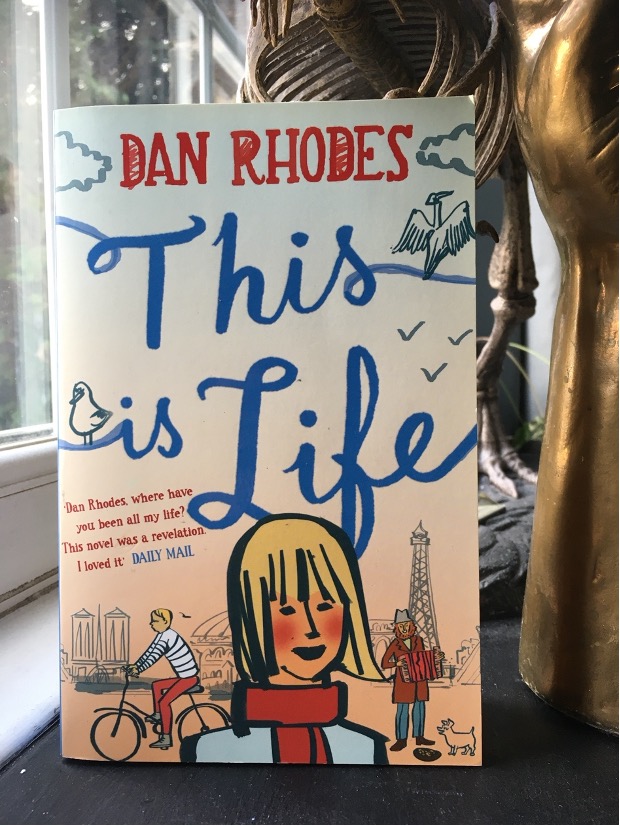
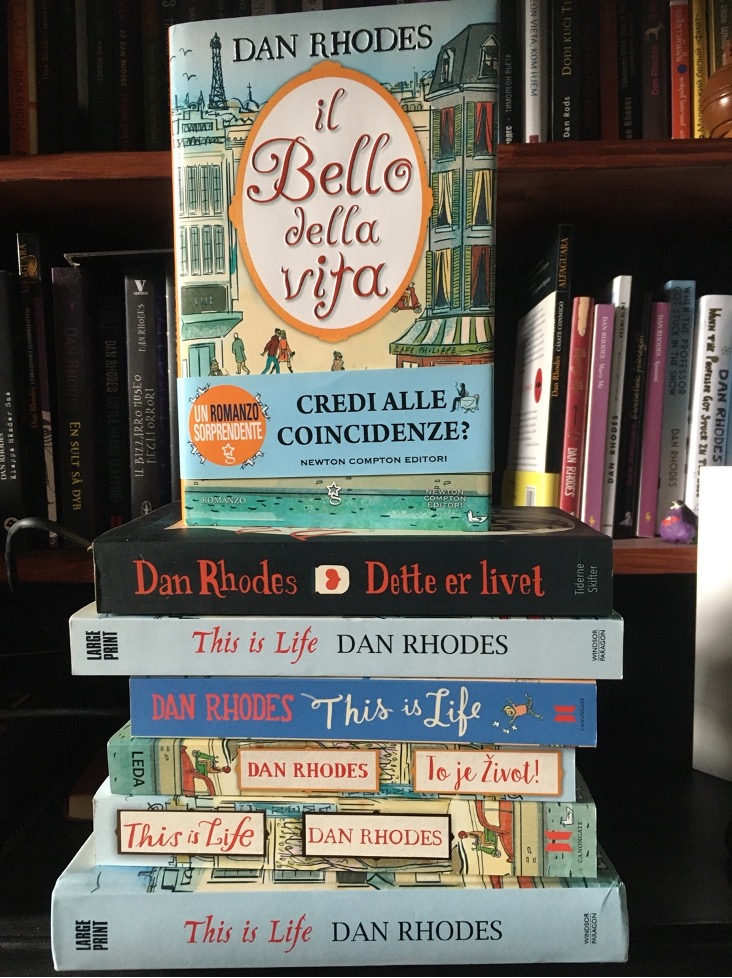
It’s true, my novel This is Life is turning ten years old. It’s a Parisian romp, and I love it to distraction. I recently found a pile of copies in the cellar (the edition above), so the stars have aligned and it’s time for a spectacular re-launch. If you’ve not read it, do yourself a favour and get a signed copy here.
Here’s the excessively long story of how I came to write it, and what happened next. It’s a tale of highs and lows. Babies are born, there are really tenuous cameos from pop stars and royalty, and – I would hate to disappoint – I spend half of it frothing at the mouth about the Usual Suspects. If that seems like something you’d be interested in, let’s get cracking. Make yourself comfortable, and don’t say I didn’t warn you.
It all began, as most things do, with a chicken pox vaccination in Stockport. Wife-features had never had that particular lurgi, and we were planning on having a second child, so she was advised to get herself jabbed. Our local medical practice couldn’t administer the injection, so we had to travel to Stockport, which is about twenty miles from where we live. We’d not been in the area long, and this was going to be our first trip there. She took to researching it, and started getting excited about the Hat Museum, and the Air Raid Shelter, and all the other things we could combine with the visit to the doctor. Then we found out that all those places were closed on Mondays, the day of the injection, and her plans turned to dust. We resolved instead to walk around the shops. They have a TK Maxx, so all was not lost.
To see her get so fired up about a trip to get an injection brought home quite sharply how we had slipped into a rut. This is quite normal with a pre-schooler on the scene, but I still felt an urgent need to up my husbanding game and give my poor bride something really worthwhile to look forward to – something even better than a half-day excursion to a specialist immunisation clinic in a nearby town. It meant dipping into life savings, but something needed to be done, and a few weeks later, with the toddler farmed out to grandparents, we were on the Eurostar heading for Gare du Nord, and a cheap hotel at the foot of Montmartre. We’d both been to Paris before, but only just. I was there for a couple of days while Interrailing at the age of seventeen. The city was, of course, wasted on me back then. Wife-features had also visited as a teen, on a visit from her home in Manila to family in Germany, when she’d been taken on a whistle-stop tour of Europe in her uncle’s car. For her, Paris had been a quick meal at a Chinese restaurant, a hurried gawp at a distant Eiffel Tower, and a hasty retreat. It felt like the first time for both of us and we were, it would be pretentious to deny it, very much tourists.
A few years earlier I’d published a novel set in Paris, The Little White Car, which I’d written – for no reason other than it amused me at the time – under the transparent pseudonym of Danuta de Rhodes; a youthful, glamorous and female alternative to myself. I’d hoped to visit the city while writing that book, to do some extensive research in the bars and cafés, but the wages from my stockroom job at a bookshop never quite reached the point where I could cover it. So instead I’d bought the Time Out guide, and worked with that. [Incidentally, This is Life takes place in the same universe as The Little White Car; they share a character. A character from Little Hands Clapping makes a cameo too.]
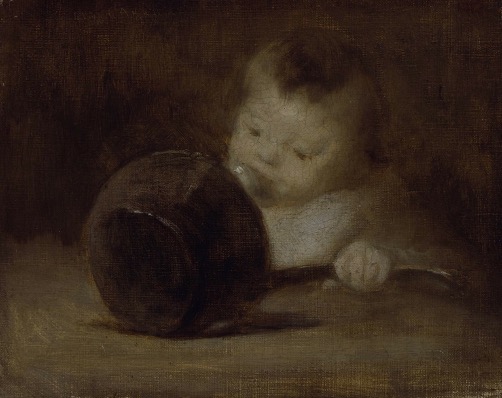
So there we were. Paris. This was 2010, before smartphones had been invented (well, in our house, anyway) and we’d forgotten the camera, so we bought a disposable one – the viewfinder of which, we subsequently discovered, was aligned in such a way as to make sure we were only taking pictures of each other from the knees down. The first thing we did was get lost on the way to the hotel. Then, once we’d found it and dumped our bags, we got lost again (which was fine – you don’t really know a city until you’ve repeatedly got lost in it). At one point we found ourselves on Rue Eugène Carrière, named after the painter. This was a cause of jubilation, because a few years earlier we’d found ourselves transfixed by a tiny picture of his, Enfant avec une casserole, at Aberdeen Art Gallery, and an oversized canvas of it hung on our wall at home (it still does). Suddenly, by mistake, we were lost on a road named after him.
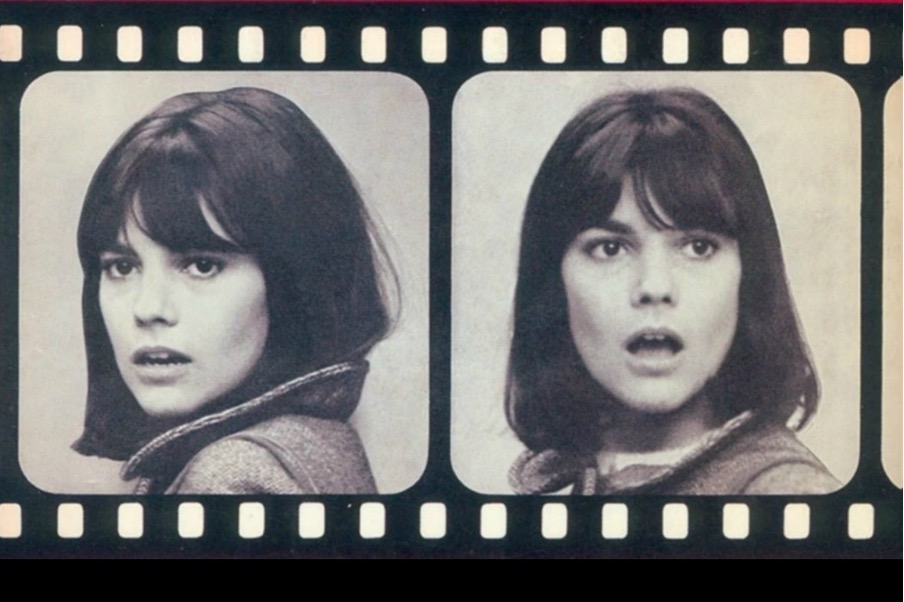
We looked for streets that seemed to go uphill, and soon we were winding our way to Montmartre. Before long, a minor drama began to unfold on the road ahead. In this neighbourhood it’s possible (at least it was back then) to rent a groovy old Citroën 2CV, complete with driver, to cruise the narrow lanes. One of these little beauties was up ahead, and it was having a bad day, struggling to make it up the cobbles. When we reached it, we asked the driver, a young woman who seemed to be having a great time regardless of the grinding noises coming from under the bonnet, if we could help. She jovially declined, saying that if it came to it her passengers could get out and push. She gave the impression that this was quite a regular event for a 2CV driver in Montmartre. I caught a glimpse of these passengers, grim-faced in the back seat, and hoped that it would come to it. It would have been quite a show. Sadly, she skilfully got the car moving just enough to regain its momentum, and off they went, leaving just a black cloud and a burning smell. An episode like this ended up in the book, the role of the driver taken by the character Sylvie. [The only time I’ve ever used the ‘this-character-looks-like-this-famous-person’ shortcut in my writing was when I described Sylvie as resembling a Godard-era Chantal Goya. Usually I would consider this to be lazy writing, and I would be right, but I couldn’t find a way to improve on it, so just this once I let it sneak through. I named her after the superb story ‘Sylvie’ by Gerard de Nerval, which I recently re-read after many years, and discovered it also contained a character called Aurélie – the name of Sylvie’s co-conspirator in my book. It’s a small world.]
We’d only just arrived in the city, and a story was forming. I already had the starting point. I’d cut a thread out of The Little White Car where a stone was thrown into a crowd as the instigation of an art project; I’d liked the idea, but it was too much of a tangent for a breakneck novel so I booted it into the long grass. Here was its moment.
The next day we walked along the Seine, where we saw a cormorant, and I held my breath for as long as it stayed underwater. We strolled through various gardens, often beneath horse chestnut trees, where we marvelled at the carpets of conkers lying, ignored, below. I briefly considered running a conker import/export sideline. We ate falafel in Le Marais, and went on an evening trip to the Musée de l’Érotisme. We ate breakfast at Amélie’s café, and visited Shakespeare & Co., where – as if they’d known I was coming – there was a face-out copy of Little Hands Clapping. As I wandered around Montmartre Cemetery I jotted down names for future use, almost as if I was a proper writer. Pretty much everywhere we went over the course of those three days ended up worming its way into the book. By the time we were on the train home the foundations were in place; the rest I would have to make up as I went along.
***
I was in a hurry. This was in the dying days of writing being my main job. I’d always taken on odds and sods of casual labour on the side to keep afloat, but with a growing family and a plummeting bank balance it was looking certain that I would have to get a reliable wage coming in before too long, particularly if we were ever to claw our way out of renting. Don’t ask me why, but banks tend to be hesitant to provide mortgages to people who don’t have regular employment. Part of the solution to all this was to write a potboiler. I love reading short, quick, action-driven balls-out-commercial novels, so I had no qualms about this. I gave myself three months to finish a disposable 50,000-word romp that I could flog for enough money to add to our dwindling savings and wave at the bank as a deposit, and maybe convince them to make up the balance on a small house. Off I went. I decided to reanimate my old commercial fiction alter-ego, Danuta de Rhodes. Writing behind a pseudonym, however flimsy and facetious, opened a room in my brain that I didn’t otherwise have access to, and together we got off to a flying start.
It wasn’t long before I realised that I’d failed to achieve my dream of dispassionately rattling off some throwaway pulp that I could forget about the moment I’d flogged it. The main characters instantly became my pals, and I knew I was going to take as much care over this as I had my other books, and be just as attached to, and maniacally defensive of, the finished product. But still, I kept the speed up. For the first time, I started a book on page one and let it unfold from there. Everything before this point I’d written piecemeal, jumping ahead to set-pieces, and pasting everything together as time went by. This time I wouldn’t jump ahead; if I had an idea for a scene, I would have to write myself to that point before tackling it. And it worked. It spurred me on, I wasn’t getting tangled up, and I was loving it, writing loads every day. I even snuck away from the sprouts on Christmas day and wrote a couple of thousand words. The story grew, and morphed as it went along.
I won’t say much about what happens (as Morag MacLochness would say, yous’ll huv to buy the book to find oot), but I kept going, and stuck to my timeframe. Three months after starting, the whole thing was done. Its predecessor, Little Hands Clapping, had taken three years. I’d failed quite spectacularly in the length department – it was over twice as long as I’d planned: at 108,000 words it remains the longest book I’ve written. So much for my pocket potboiler. I’d never written like that before, and I couldn’t have been happier with how it had all come together. I had a really good feeling about this one.
***
There’s a terrible point in a book’s life when you have to take it out of your head and into the cruel world. As usual I didn’t have an agent – agents don’t like me – so it went straight to my publisher of the time, a Scotland-based operation whose name escapes me. They came back all positivity, and said they wanted to publish it, but on one condition: that I put it out under my own name. The squares had taken over. I hated this idea. I knew that if I did this I would be permanently shutting the door on the Danuta room in my brain, the very thing that had fuelled this book, and made it such a joy to write (and, I was hoping, to read). They gave me a tight deadline to decide: ‘This offer is off the table at noon tomorrow’ (you don’t have to read that in a Scottish accent – a cabal of minor English aristocrats seized power a long time ago), a move that seemed heavy handed, unnecessary and just plain ‘orrible. Alarm bells rang, but when it came down to it I desperately needed the money, and I caved in. I can’t win every battle, and maybe I’m not always right about everything. Perhaps it really was time to put Danuta to sleep. Looking back, having accepted the decision to kill her off I should then have taken the book on to the open market. Because of its size (mainstream publishers, bless their hearts, love 108,000 word novels) and potentially broad appeal (well I think so, anyway) I’m pretty sure it would have generated interest. I’d had a gathering Bad Feeling about that operation for a while – so much about it just didn’t seem quite right – but I’d suppressed it. If I’d had more trust in my instincts I’d have got out sooner from what I subsequently realised was a Very Bad Situation. But it was what it was, and it all happened quickly. It felt as if I was selling a limb, but I signed the contract, cashed the modest but helpful cheque and hoped for the best.
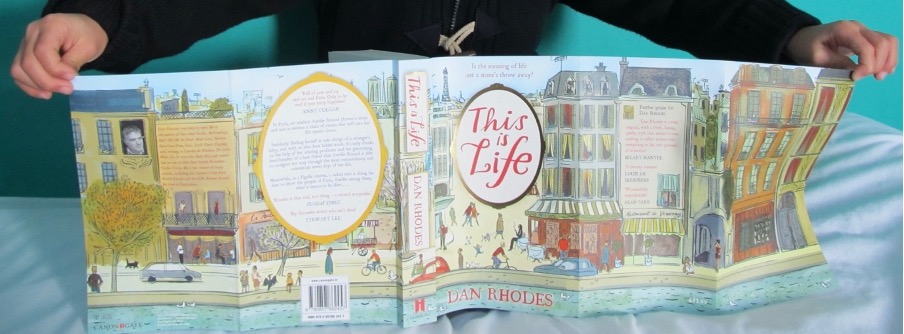
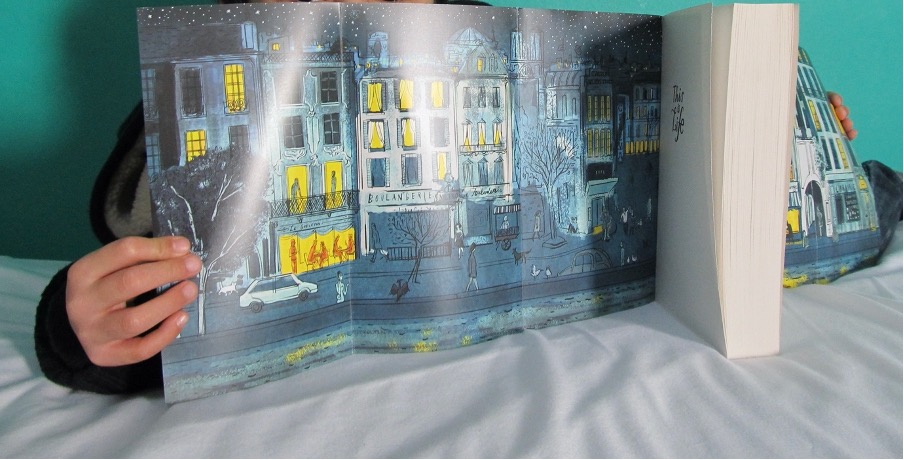
Surprisingly, I soon got over my uneasiness. Thanks to my scraps with their god-awful bosses, I’m often guilty of forgetting that most people who labour in the book mines are excellent, and I worked with some great humans at that place. One of them helped me with my dismal French (I’d included phrases here and there, all of them wrong), the copy editor and proof reader (the engine room of the industry) were a pleasure to work with, and the cover… well, the cover was fantastic. I’m inclined to stand aloof from jacket designers. I don’t want to get under their feet; the last thing they need is an author hovering around offering ‘helpful ideas’. I can claim no credit for it at all. If you’ve seen the first edition, you’ll know what a beauty it is. It had fold-out flaps with a Parisian street scene that included little nods to things that happen in the story.
Wowza. And just look at the inside:
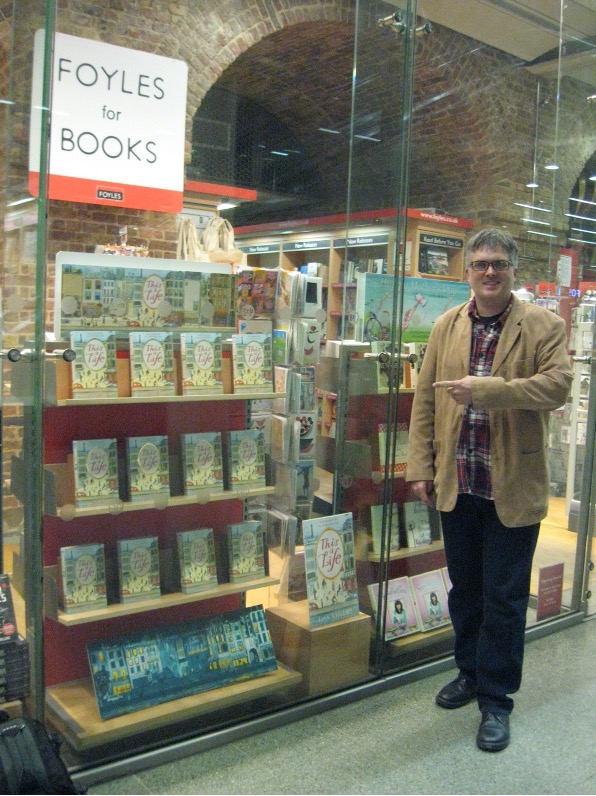
A total stunner from Dermot Flynn & Rafaela Romaya, in conjunction with the publisher’s in-house art department. I could hardly believe I had such a beautiful book out. It was printed on high quality paper, too. Bookshops loved it, it was picking up great coverage, and was selling well. It was the kind of book that’s in such a magical edition that people are going to want it even if they have no idea who I am or what it’s about. As a thing alone, it was an amazing object. I was so proud of it. Here it is in the window of Foyles at St. Pancras Station, home of the Eurostar, where it was selling like a dream. Look how happy I am. [I still have that shirt. I wear it when I’m decorating.]
Publisher, author and bookshop in perfect harmony.
Needless to say, the wheels soon came off.
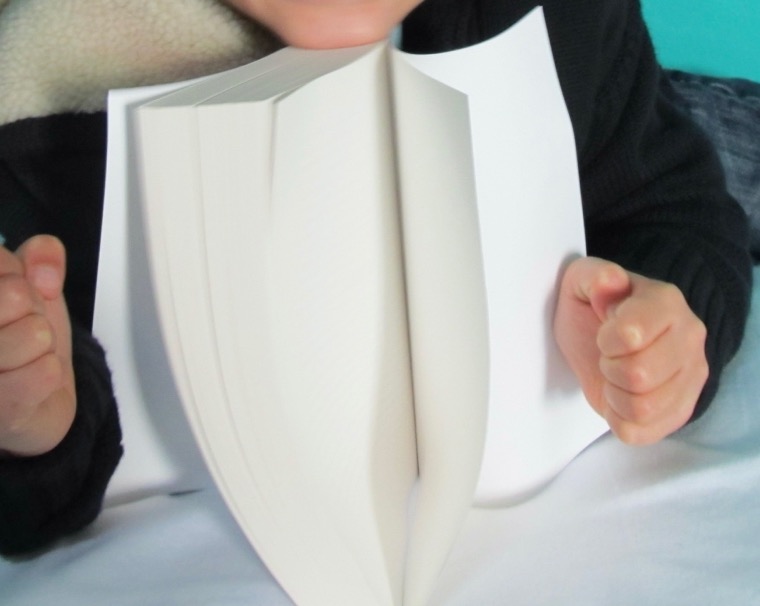
I’d noticed that the photo credit on the cover was wrong, and contacted the publisher to ask them to correct this for future printings. Routine stuff for a first edition. I heard back that they had already reprinted the book, but that there had been ‘no room’ for the photo this time. This didn’t sound right. I asked them to send me a copy. A few days later an ominously skinny jiffy bag arrived. Inside was a monstrosity. Get your sick bag ready:
Ugh.
Prior to publication, a proof edition of the book had been circulated. If you’ve ever worked in the trade you’ll be familiar with these – early copies, not meant for sale, that are printed on poor quality paper. There’s a move towards calling them ‘galleys’, but I’m too old to change. Either way, the idea is to get friendly booksellers, journos, etc., on side prior to publication by sending them advance copies, at the same time producing something that looks a bit blah, and won’t ever be confused with the finished version. What arrived in the post – the second printing of This is Life – was on exactly the same low-grade paper as the proof had been. I put them side by side, and apart from the bar code there was nothing to distinguish them. They were essentially selling a proof as though it were the finished product, which is 100% not cool. The spectacular flaps were gone, the inside covers were bare white, the ink was faint. Because of the cheap, thin paper, the book was noticeably less substantial than it had been. There’s almost a centimetre’s difference between the two versions.
I hit the roof, and ten years later I’ve still not come down.
They explained. The first run had sold out, and reorders were coming in, but the powers that be had crunched the numbers and decided that on a shorter print run they wouldn’t turn much of a profit if they maintained high production standards. So they had decided instead to scuttle everybody’s hard work, and churn out a wretchedly poor-quality run to fulfil demand. This was a failure on so many levels. The book had been off to a flying start, not least because of the sheer excellence of the edition. This is what was being ordered: a superb quality item, not a nasty knockoff.
For their trade customers, it was a seedy bait-and-switch – the ISBN was unchanged, so bookshops re-ordering what they thought was the same edition would in reality be ordering a wildly inferior physical product. I wonder whether this is even legal – if it is, it shouldn’t be. Having worked in a bookshop for many years, it made my blood run cold (and boil at the same time). Any reader ordering it wouldn’t know until it arrived that the publisher’s quality standards had disappeared around the u-bend, and anyone browsing in a bookshop would wonder why there was such an underwhelming-looking book on the shelves at such a disproportionately high price, and buy something else instead. Even now when people buy it on the collectors’ market it’s a case of Russian Roulette as to whether or not they’ll get the real edition or the bootleg-quality abomination. I’ve been in the biz for 28 years, and I’ve never known a book to suffer such a dramatic drop in its production values on the same ISBN. I can’t think of anything even coming close.
All momentum was lost. What a rotten way to run a business. As well as it being two-fingers to their trade customers, and end customers (a.k.a. my readers, for crying out loud) it was a kick in the teeth for everyone – their own colleagues – who had worked so hard to get it to where it was: in the shops, looking great, and selling.
Accountants are sovereign in publishing, and I understand that balance sheets are important, but when those accountants have no understanding of what books are, what they mean to authors and readers, or even what their trade customers are expecting when they place an order, things fall apart. But you can’t blame the accountants for everything. The people at the top of the book side of the company must have had at least some knowledge of the basics of ethical commerce, and known of the importance to themselves and their authors, not to mention their colleagues, of not publishing worse-than-nothingy editions for the sake of saving a couple of hundred quid. Bollocks, to this day, to the people who run that company.
When I challenged them about this move, they loftily asked me if I would rather it hadn’t been reprinted at all, as if I would suddenly see that they had in fact made a justifiable, perhaps even inspired, business decision, and would come around to their way of thinking. They must have thought that when it came down to it I was just as wilfully myopic and professionally slovenly as they were, and they seemed surprised and affronted when I told them that YES, I would so much rather they hadn’t reprinted at all than tricked my readers into buying a shitty edition. It would have been much more sensible to have the amazing edition sell out, and wait for the mass market paperback to come around. It would still be an e-book if anybody was desperate to read it in the interim. To their ongoing discredit they doubled down on their decision. Apparently I just didn’t understand the business. Throughout they acted exasperated, as if I was making a lot of unnecessary fuss over a minor detail.
If I’d had an agent, their role would have been to step in and help sort this out (whether they would have done is another matter), but as I was managing myself I had to deal with the publishing house’s senior management on my own. David & Goliath time again. Yawn. In this situation you have a simple choice: you either curl into a ball and let the Sloane Rangers get away with whatever it is they’ve been up to, or you make an absolute menace of yourself. Some of you with long memories may remember that at this point I used the only weapon in my armoury and went apeshit on the Internet. Unable to publicly defend the indefensible, the publisher at last agreed to stop the distribution of this edition. I don’t know how many copies were printed, how many left the warehouse, or how many were held back. I should have asked for figures, and supporting evidence, but the whole thing was so brain-sautéingly weird and disorientating I just wanted it to be over. [These people were supposed to be my allies! My team! It’s so odd!] I know, though, that far too many of the mutant editions got into the outside world. Maybe even hundreds. If you have one, I’m sorry. It was done behind my back, and they’d hoped I wouldn’t find out. Rest assured I was furious then, and – as you’ll have gathered – I’m still furious ten years on. If you got a decent copy though, well done. Good, isn’t it? I still frequently wake up in the middle of the night bubbling with rage about this wretched episode. It was the beginning of the end of my time with that particular publisher.
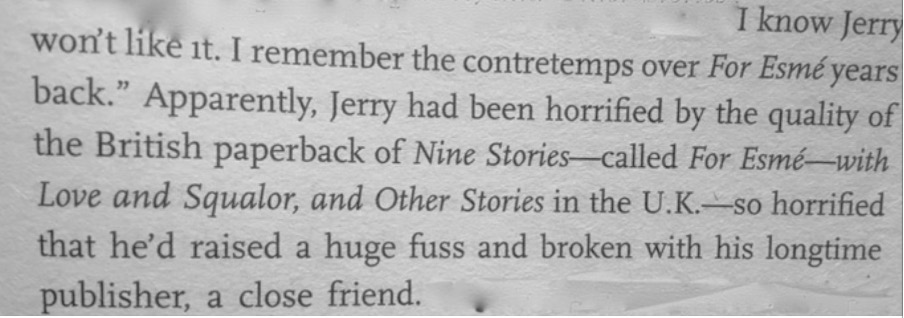
Misgivings that had been pecking away for a long time reached critical mass, and all benefit of the doubt drained away. From that point on it was all about the exit strategy. Seriously, publishers – you can either have a good relationship with your authors, or you can deliberately bollocks up their editions. It’s one or the other. J.D. Salinger knew the score (from Joanna Rakoff’s ‘My Salinger Year’):
A perfectly decent small format paperback was quietly released a year later, and after just four years I had to pull it out of circulation, along with my other titles from that house, after I found a huge pile of my earnings had gone AWOL. The same finance department that had insisted on that cheapo edition hadn’t been doing its job properly in other ways too. Thanks to them, and the creepy management culture that surrounds them, it’s celebrating its tenth birthday out of print. Rats’ cocks. It lives on though, in its quiet way. Whenever my library loans statement comes in, This is Life is always the runaway winner, head and shoulders above the others. Also, I recently found a load of smaller format paperbacks in the cellar (decent editions, you’ll be pleased to hear – the one at the top of this long, long piece), and you can buy a copy – or even several copies – via the Big Green Bookshop while stocks last. [If you buy them elsewhere I won’t get paid a penny, and they’ll be second hand and most likely covered in a stranger’s jammy smears. Incidentally, did you know that 80% of strangers use toenail clippings as bookmarks?].
I’ll finish by tying up some loose ends.
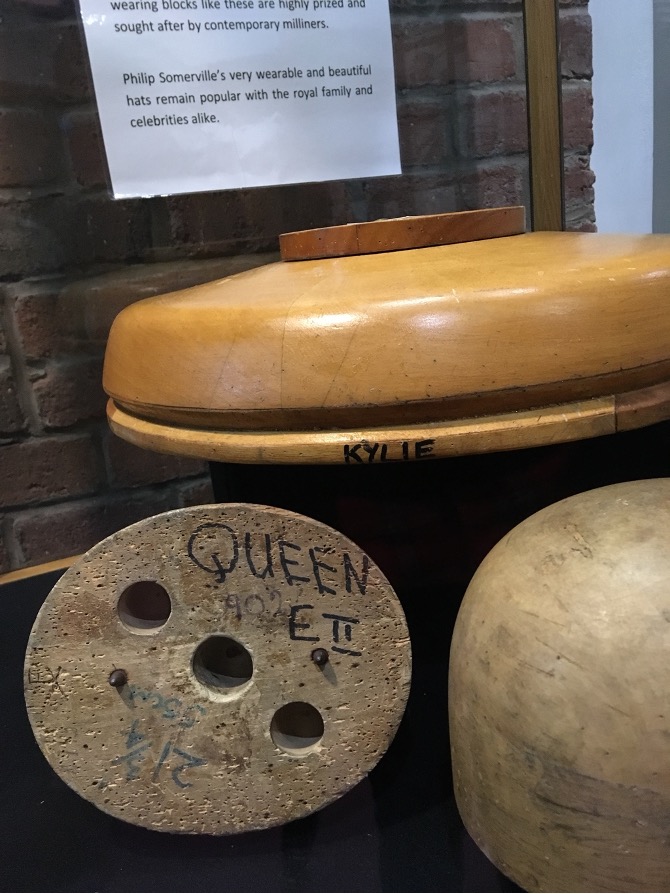
The injection happened, and we had a good time at the shops in Stockport. We’ve been back many times since, and have grown fond of the place. We’ve finally made it to the Hat Museum, which is brilliant (see below for the long-awaited celebrity cameos), and the Air Raid Shelter. #visitstockport.
Rather than doing the right thing and leaving the industry in shame, the same core people remain at the top of that publishing house, where they regularly award each other promotions and pay rises. Don’t let the cheesecloth dungarees fool you – they are a bunch of Tories. For the good of my health I’ve not been in direct contact with them for two years. Our last exchange came when I wanted, not unreasonably I feel, to know the story behind the latest batch of missing money. They wouldn’t cooperate, but eventually they explained that they weren’t going to answer my questions because I ‘continue to ask’ them. Wonderful logic there. I kept at them though, and eventually discovered that many years previously The Little White Car had been a modest hit in a small European country, and the royalties hadn’t reached me. They were found in an audit by that publisher’s new owners, who were honest enough to forward them. Why I had to go in like Giant Haystacks just to get some simple information about something that was very much my business is anyone’s guess (mine being that they want my every interaction with them to be a crushingly demoralising ordeal so that I’ll stop requesting the basic information I’m entitled to – if so, to give them their due, it is quite an effective strategy. The longer they drag things out, the harder it is for the situation to be resolved). Seriously, publishers – when money goes missing it’s an extremely big deal that needs to be properly sorted out. It’s your mess, and it’s your responsibility as human beings to make sure the author gets through a traumatic episode of your making in one piece. When even more money is found to have gone missing, the same applies – perhaps even more so. Don’t just send them some Snoopy books, languidly announce that you’ve had a glance at the accounts and found everything to be fine, and come over all indignant when they tell you they don’t feel that either of those are an adequate substitute for straight answers and external scrutiny. That would make you the same as them, and I would like to think you’re better than that.
A few months before the book came out I let go of the excellent little office I’d been renting and got a steady job, outside the book world, which I still hold down. A while later we were able to hypnotise the bank into lending us enough to buy a cottage on a hillside, where we live to this day. A month after moving in we had our second baby, and he’ll be turning ten this year too. Tempus fugit. And after several years of being too demoralised to pick up a pen I managed to get a new book, Sour Grapes, written and released at the end of last year. Don’t forget to buy a copy while it’s still an excellent hardback.
Danuta de Rhodes hasn’t forgiven me for betraying her. I don’t blame her. I can’t see her ever coming back. Balls.
The vaccine didn’t take – a couple of years later everybody in the house except me came down with chicken pox. But something pretty amazing, for me anyway, came out of being sent to Stockport: This is Life. Of all my books, it’s the one I’ll turn to in old age, when I remember I used to be a writer, and wonder whether I was any good or if I was just wasting my time.




 Dan Rhodes